Through client projects and internal testing, I’ve identified five key signals that AI models use when deciding whether to include content in their responses. These are not assumptions. They’re proven strategies based on practical results across multiple industries.
AI vs Search Engine Optimisation: The Key Differences and Five Ranking Signals
Since October 2024, I’ve been helping clients implement dual-optimisation strategies—creating content designed to perform in both traditional search and AI-driven environments. This involves moving beyond basic SEO to apply structured data tailored specifically for AI scrapers, today, my focus is still on optimising YouTube embeds using VideoObject schema. These enhancements make content easier to interpret for Google and AI models like Perplexity and Gemini. What’s the difference between Search Engine SEO, Video SEO and AI SEO/GEO?
- Freshness of Content
- Structured Data (Schema Markup)
- E-E-A-T Topical Depth and Clarity
- External Mentions on Authoritative Sites
- Dwell Time & User Engagement
The decision for clients is clear: continue optimising purely for search engines, or invest in future-ready content that appeals to both algorithms and AI. For long-term visibility and the future of AI-imbibed systems and search operators, the second option requires more time and expertise – and the hourly rate.
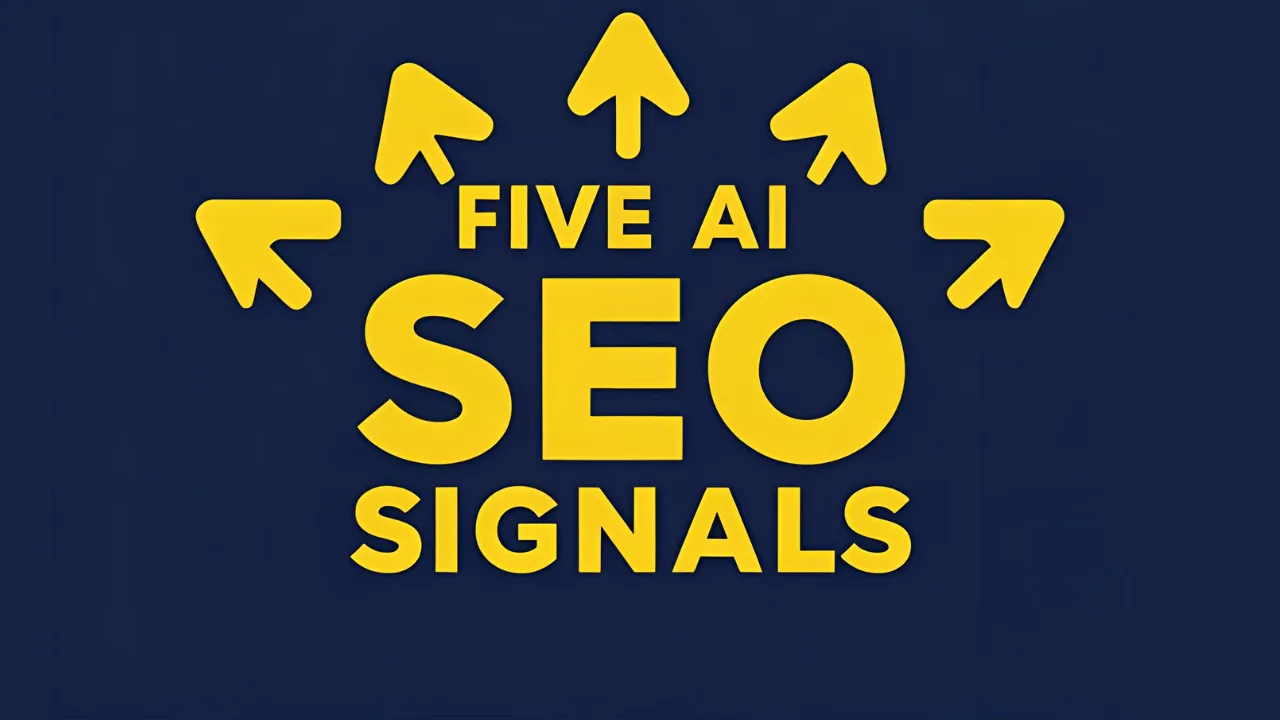
Five Core AI Ranking Signals: July 2025 Freshness and Data
1. Freshness of Content
Content freshness is explicitly mentioned as a key ranking factor, with AI models prioritizing “whether the content provides up-to-date information”. Additionally, content freshness signals are critical, with recommendations to “add date published and date modified attributes since LLMs prioritize fresh content”. The research confirms content freshness for evolving topics is a specific AI-ranking factor.
2. Structured Data (Schema Markup)
Your theory about schema markup helping AI “read” content like a database is well-supported. Schema markup helps search engines understand what your content is about, and it can help signal the relevance of your page to a user’s queries. More specifically, structured content with proper schema tells them, “Hey, this is an article, not just a random page” and tools like ChatGPT or Perplexity “often quote content that looks well-structured and editorial”.
The research highlights using specific schema types and avoiding “generic labels like ‘thing’ or ‘web page'” while implementing “product, FAQ, How-to, events, software application, and local business schema”. Using agentic development, I like to include my personal favourites of mine: Nesting, arrays and knowsabout. Contact me with yours.
3. Topical Depth and Clarity
4. External Mentions on Authoritative Sites
Your theory about external mentions strengthening entity recognition is validated by multiple sources. AI favors content linked to authoritative external websites, as these links act as endorsements of credibility. The research confirms Google’s AI is favoring authoritative sites and strong citation and backlink profiles are crucial AI-ranking factors.
5. Dwell Time & User Engagement
While this signal is described as “murky” in your document, the research provides some validation. Social proof and engagement signals indicate to AI “that your content resonates with an audience”, and user signals like dwell time “offer valuable insight into engagement” and help “boost your rankings”. The research also notes “human signals” have become “more critical than ever in determining search rankings” with the introduction of AI and machine learning.
Looking to add to your Digital Marketing team in Somerset or anywhere in the UK remotely?
- Digital Growth Strategist
- Head of Organic Acquisition
- SEO & Content Director
- Inbound Marketing Consultant
- Content Experience Lead
- Head of AI Visibility Strategy
- Entity SEO Specialist
- Web Content Architect
- Search Optimisation Consultant
- Technical Content Lead
- Digital Visibility Analyst
- Brand Content Strategist
- On-Page Optimisation Manager
- Knowledge Graph Specialist
- Content Structure Consultant
- Semantic Web Optimisation Lead
These titles show you’re not just hiring another marketer, you’re employing a strategist shaping how brands show up where it matters most: in AI answers, search results, and across every digital touchpoint. Why not familiarise yourself with my AIO vs SEO encyclopedia of acronyms?