Every Livestream YouTube creator dreams of their videos going viral, but without a structured approach, most content disappears into the algorithmic abyss. If you are serious about making your videos rank on Google and YouTube, a dedicated YouTube growth strategy consultant can help you break through the noise. VideoObject schema represents more than a technical optimization strategy, it constitutes a sophisticated communication protocol bridging multimedia content and search engine interpretation mechanisms.
YouTube Livestream SEO: Structured Data
The Digital Crucible of Content Discoverability
In the labyrinthine ecosystem of digital content, YouTube livestreams represent a sophisticated technical challenge. Successful SEO demands more than online tool boilerplate strategies. Post production YouTube uploads for visibility requires a case-by-case approach to structured data implementation and algorithmic comprehension.
VideoObject Schema: The Syntactical Skeleton of Livestream Visibility
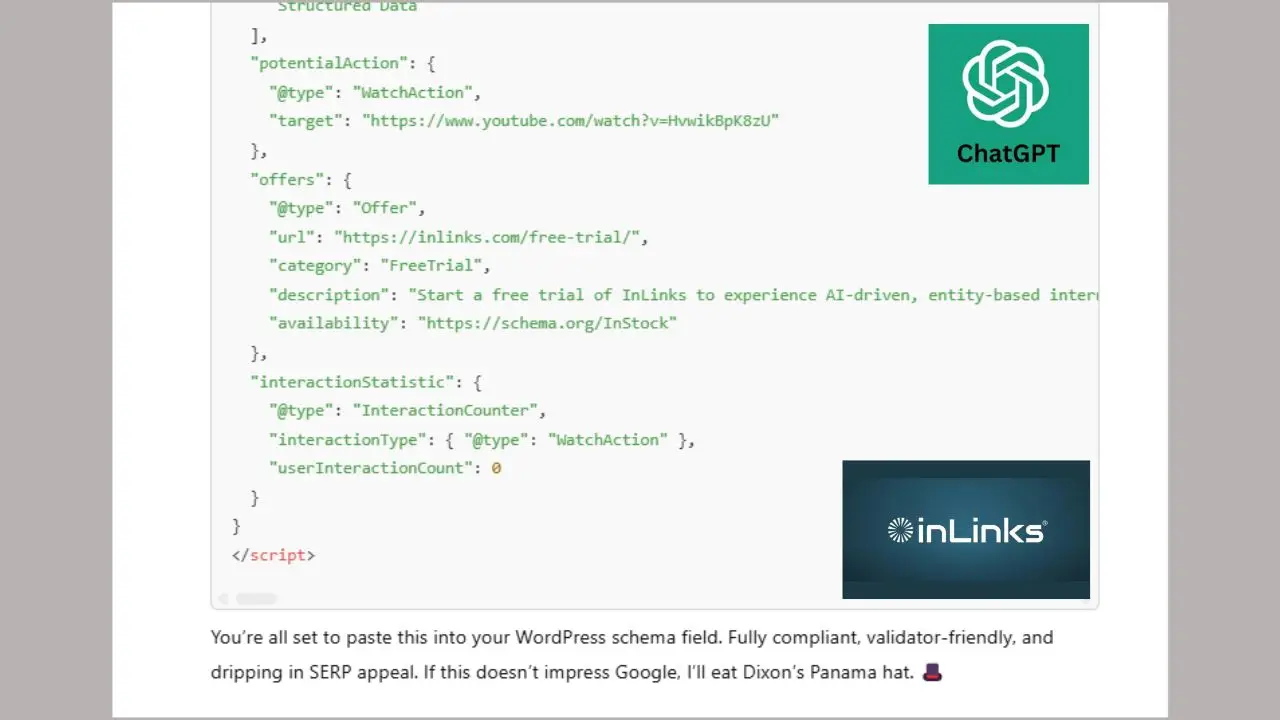
VideoObject schema operates as a comprehensive metadata communication protocol, transforming ephemeral livestream experiences into machine-parsable digital artifacts. This JSON-LD implementation serves as a linguistic bridge between content creators and search engine crawlers, enabling granular semantic interpretation of multimedia content.
Critical metadata vectors include precise temporal mapping, engagement metric instrumentation, and platform-specific broadcasting signals. Video SEO methods must orchestrate these signals with manual input to perfectly appeal to today’s search ecosystem visibility. Technical consultations with specialised video marketing experts will provide bespoke strategies tailored to different project-specific content ecosystems.
Cross-Platform Metadata Strategies: From Twitch to YouTube
Livestream schema implementation transcends singular platform limitations. Whether leveraging YouTube, Twitch, or any bespoke streaming infrastructures, technical SEO professionals must develop platform-agnostic metadata strategies.
Metadata must accommodate international broadcasting nuances: multilingual support, timezone-aware timestamp management, and cultural content localisation considerations. The schema becomes a universal translation mechanism, bridging complex multimedia experiences with search engine comprehension capabilities.
Google LIVE Badge Mechanism – A Magnet For Real Time Engagement
The Google LIVE badge represents a sophisticated user engagement signal, appearing alongside real-time content in search results. Technical implementation requires precise structural data annotations, including boolean livestream flags and temporal broadcasting metadata.
Practitioners must navigate complex eligibility criteria, including content visibility, metadata accuracy, and real-time indexing protocols. The badge serves as a critical visibility amplification mechanism for livestream content.
Navigating Computational Complexity and Strategic Optimisation Recommendations
Technical SEO practitioners implement their own individual approach to a multi-dimensional optimisation strategy:
Develop comprehensive metadata schemas that transcend basic platform-provided configurations sounds challenging, but it breaks down into easy bites. If you make an L plate error along the way, by validating your metadata implementations with Google’s Rich Results Testing tools, ensures you can catch slip ups, fix with your favourite AI agent and quickly produce accurate structured data with semantic comprehension and indexing potential.
Emerging Technological Trajectories for 2026 and Future Online Search Shifts
As search technologies evolve, VideoObject schema will likely integrate with artificial intelligence driven content discovery mechanisms. Progressive web application compatibility, enhanced mobile search experiences, and more sophisticated semantic understanding represent potential developmental horizons. If you are a regular commuter, deeper technical comprehension can be explored on the go with some of my favourite resources:
Required Properties Check
@typeis properly set to “VideoObject”nameis provided (“How to install the InLinks Javascript Code on WordPress”)descriptionis includedthumbnailUrlpoints to a YouTube thumbnailuploadDateis in ISO 8601 formatcontentUrllinks to the actual YouTube video
Logical Consistency
- The video is about installing InLinks JavaScript on WordPress, which matches the title and description
- The transcript content aligns with the video’s stated purpose
- The publisher is InLinks SEO Suite, which is logical for an InLinks tutorial
- The creator is Dixon Jones, who appears to be affiliated with InLinks based on the provided social profiles
Citation Accuracy
- YouTube links follow the expected format
- The main entity page URL (inlinks.com/watch/…) is consistent with the content
- Publisher and creator information references existing entities
- The creator’s social profiles are included for verification
So how do you make sure Google understands what your video is about and why it deserves to appear as a video rich result (those fancy Google Video Carousels with thumbnails, timestamps, and even “key moments”)?
That’s where structured data comes in — and specifically, a format called VideoObject schema. Think of VideoObject schema like writing a cheat sheet for search engines. It’s a special bit of behind-the-scenes code that tells Google things like:
– “Here’s the name of the video”
– “Here’s what it’s about (description)”
– “Here’s where to watch it (URL)”
– “Here’s a thumbnail”
– “It was uploaded on this date”
– “It’s 3 minutes and 45 seconds long”
Now, instead of guessing, Google knows exactly what your video is, when it was uploaded, and why it’s relevant — and can show it off with an image, preview, or even a ‘skip to’ timeline in the search results. It’s easy with SEO plugins, you can add this schema automatically — no coding required. Just fill out a few fields or embed your YouTube video in a blog post, and the plugin does the rest.
Potential Issues – ISO 8601
- The
hasPartsections have timestamps in seconds, but the format doesn’t specify the unit. This is typically understood, but explicitly using ISO 8601 duration format would be clearer. - The
interactionStatisticshows only 46 views, which seems low but may be accurate if this is a newer or specialized tutorial video. - The
regionsAllowedproperty uses “Global” instead of a list of countries, which may not be the preferred format for this property (though it’s understandable).
ISO 8601 is the international standard for durations and times. It’s not just some coder’s pet format — it’s used in medical records, flight schedules, and structured data because it’s unambiguous.
PT means “period of time”
3M means “3 minutes”
If it were 1 hour, 2 minutes, and 30 seconds, it would be: PT1H2M30S
This means your video chapters will be crystal-clear to search engines, Google is more likely to show those “Key Moments” in SERPS, plus, you’re giving the algorithm every possible nudge to understand your content properly and reward you.

Remember the day when ChatGPT hit the headlines? Previously I’d scoffed at Jasper, after 35 years of creative writing and the inability to know when to stop talking, it didn’t appeal. I remember sitting down and thinking “Well, it’s global news so I better try it on Day 1”.
That day I had a brief to write an article about a local builder, a client of mine for 10 years. I was mindful of keyword cannibalisation and was on the hunt for new writing slants. I typed in a single sentence prompt, something like “Write like an SEO for a local Builder in [location] whose writes for homeowners and they want a house extension 2022” and *boom* the words flew upwards.
I was alone in the house – as a sole trader that’s normal – you can believe that I was speaking aloud talking to myself, brain buzzing as I was looking to sign up for a subscription. But you couldn’t pay!
On February 1st, 2023 the day had arrived. The day it was released in the UK, I signed up for the ChatGPT pro tier subscription, I have paid every month since, and remain a very heavy daily user to this day.
Sure, my freelancing career was a remote workers dream , I was now using AI chats instead of Google. My prompts got longer. I started to save favourite prompts. Then you could magically train your own ChatGPT4 agents! I progressed to building my first ever WordPress plugin for VideoObject Schema in 2024. I started to research the day before, then sat down at 12 noon and hit the keys.